

Proper Oil Sampling
Time and time again, you hear how critical a good oil sampling practice is to the success of an oil analysis program. No matter how good your oil analysis methodologies are, all efforts mean nothing if your data are garbage. So, what makes a good oil sampling practice? Here are the guidelines to follow:
Getting Started
Safe Sampling
The first goal is to keep everyone safe. Observe all safety protocols and wear the appropriate personal protective equipment. Even with safety measures, traditional sample methods can still be hazardous. These two traditional methods are sampling from the drain and the drop-tube method.
Sampling from the drain has frequently resulted in burns, and opening up a system for sampling might expose employees to risks. It’s also difficult to manage the flow of oil out of the machine using drain port sampling, and too much oil loss might lead to lubricant starvation. Furthermore, opening up the machine exposes it to particles, moisture, and water contamination that negates the goal of obtaining a representative sample.
Another dangerous old approach is drop-tube sampling. Inserting a plastic sample tube into the live zone while the apparatus is running is highly hazardous. There’s a good chance the plastic tube may become trapped in the gears if you don’t do it properly. To obtain a safe oil sample, you must switch off the equipment. The system can still be contaminated while it is off. Installing properly fitted sampling ports can help protect your employees and equipment.
Reliable Sampling
To ensure safety during sampling, prioritize it as the main goal. Equally important is collecting a reliable sample. Collect oil samples consistently in the same manner and from the same area each time.
Controlling these factors is essential, as they can influence the integrity and trends of oil analysis. In science, these factors are what we call controlled variables.
Operators make variables constant to ensure that oil analysis report trends depend only on changes in the oil and equipment. They eliminate the influence of the person collecting the sample, as well as the method and timing of collection.
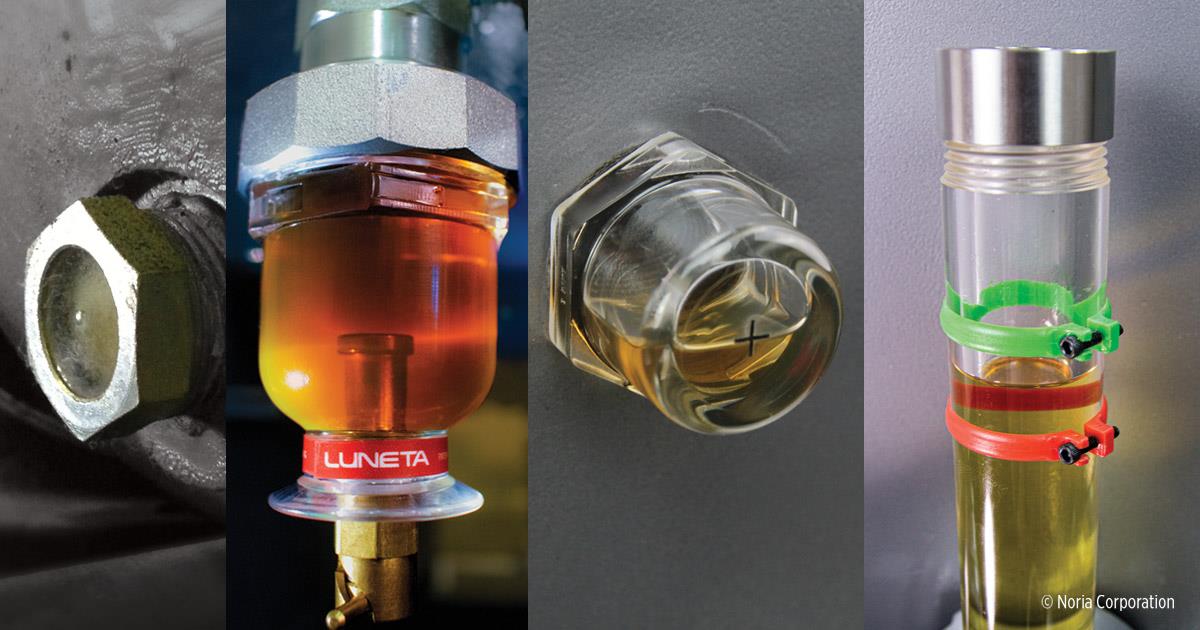
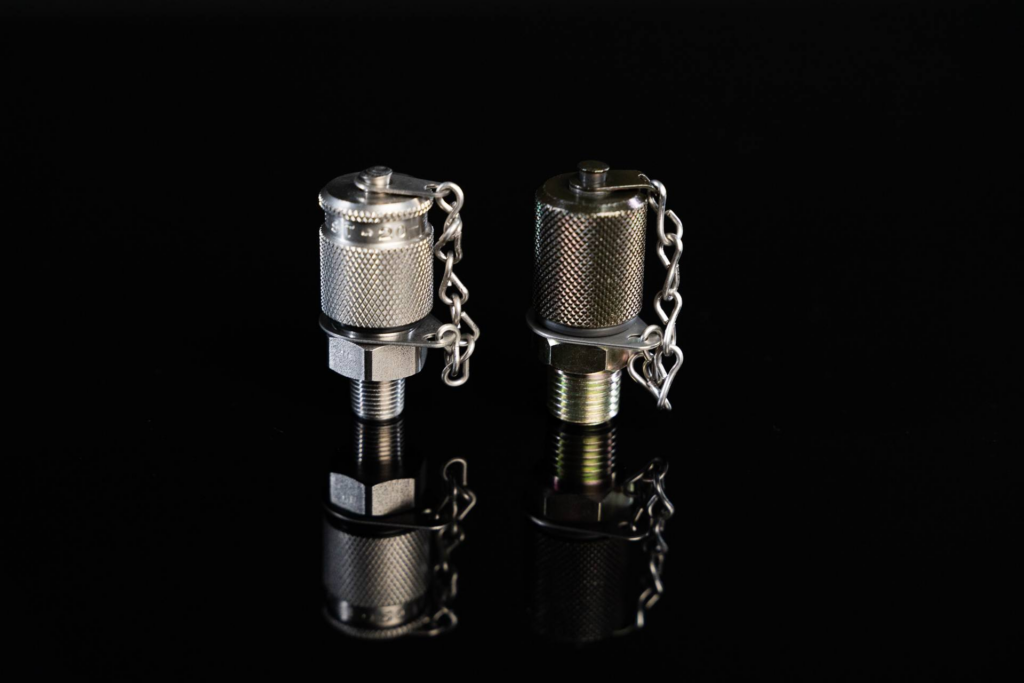
Sampling valves are necessary to get consistent and accurate samples. These valves enable operators to safely extract oil from the active zone while the equipment operates. Because shutdowns are no longer necessary, operators can take oil samples at any time.
Additionally, technicians no longer need to open up the system, lowering the risk of contamination. Additionally, sampling while the machine is running guarantees that the samples are a true reflection of the machine’s status.
Sampling from Pipes
- Collect samples while your machine is in running condition operating with a normal working load. If safety is an issue, prioritize your well-being and conduct sampling as soon as the machine stops running and the oil is still hot.
- If the sample valve has a dead leg line, flush thoroughly before collecting a sample.
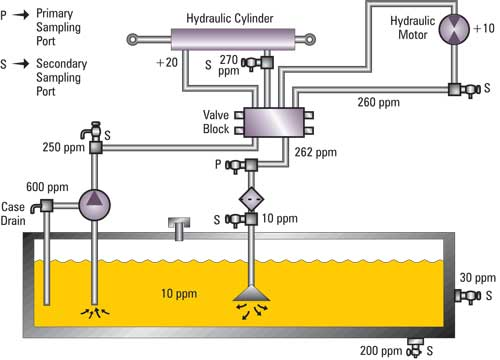
- Collect samples through a sampling port situated on return lines that have turbulent flows (e.g. elbow of a pipe)
Pressurized systems
Pressurized systems required sampling from installed ports. The ideal location of ports should be in an area that will produce the most representative oil sample. The optimal port location would be on a turbulent zone downstream of the monitored components before the filter. You can install a simple minims valve directly into the elbow of a pressurized system.
Low or Non-Pressurized Systems
Many gearboxes have limited ports available for installation. You can insert a sample valve with a permanently connected sampling tube into the drain port. To obtain the most accurate oil sample, bend the metal tube and position it close to the gears. This setup allows the sampling valve and tube to reach the oil directly in the active zone, while avoiding silt from the bottom of the gearbox, resulting in representative and reliable oil samples.
Tank: Oil Sampling
Collecting samples from an ideal location is not always conducive or safe. Other times, sampling ports are absent. In cases such as these, sampling directly from the tank is your only choice. Here are the things to bear in mind when you conduct oil sampling from tanks:
- Collect sample towards the middle, staying away from the bottom and sides. To guarantee that you always get samples from the same region in the tank, use a pitot tube attached to a sampling port placed on the sidewall. Keep in mind that the pitot tube line has an additional dead leg that must be flushed before the bottle can be filled.
- Using a special spring steel sample stick to place the suction tube exactly where you want it each time might help you achieve repeatability. A standoff can be added to the thin flat steel bar to prevent bottom sampling, as well as clasps to retain the tubing.
- When oil goes to the tank, chances are, wear metals and contaminants will settle at the bottom of the tank. This limits your ability to collect samples that truly represent the current condition of your machine. The same can be said in cases when you just get samples from the drain port of the tank.
Defining Success
Understanding reports and following through with recommendations should show a declining trend in the water, particulate, and erroneous oil use statistics. You’ve enhanced the mean time between failures (MTBF) for those machines by lowering the moisture and particle levels. Based on the moisture decrease, the gearbox should have a 1.25-times increase in MTBF, and a 1.25-times increase in particulate reduction, for a total of more than a 50% improvement in MTBF.
The occurrence of improper oil top-ups may be significantly reduced by investing in fluid identification, adequate dispensing equipment, and, most importantly, training and education. It’s more difficult to quantify the savings, but every avoided disaster justifies the improvement.
Take control of your oil analysis program today contact us now to learn how to implement safe and reliable oil sampling solutions!