


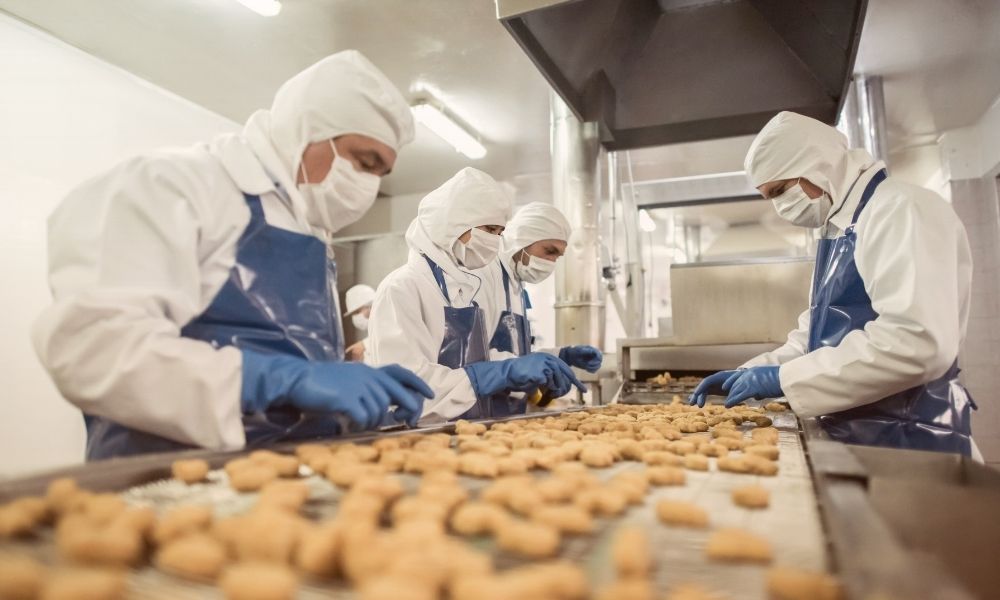
On the work floor, as much as in hospital operating rooms, cleanliness and hygiene are critical. The same is true for lubrication which keeps the business of feeding and mending the country on track when it comes to ensuring the smooth operation of manufacturing plants.
Food, drink, and medicine manufacturers place a high priority on health and safety. Because leaks and the maintenance of lubricants are unavoidable components of all businesses, it is critical that the lubricants being used at these plants are safe. Lubricants make no distinction between the items they come into touch with. As a result, finding the correct lubricants for the job is more difficult in the food processing and pharmaceutical sectors.
Lubricant formulation engineers, lubricant marketers, plant lubrication engineers, and equipment designers encounter specific issues in the food processing business. While you should never allow lubricants to contact raw materials, work-in-progress, or finished products, such contamination rarely causes as severe consequences as it does in the food processing sector.
What is a Food-Grade Lubricant
Food-grade lubricants must fulfill the same technical duties as any other lubricants, including protection against wear, friction, corrosion, and oxidation, heat dissipation and power transfer, compatibility with rubber and other sealing materials, and in certain circumstances, sealing effect.
Lubricants may encounter a wide range of environmental pollutants. For example, a corn-milling setting generates significant amounts of dust. Although it is not as hard as silica-based dust, it poses a filtering challenge. The development of microorganisms such as bacteria, yeast, and fungus is another component of lubrication contamination that poses a concern to food-grade lubricants. While these can be a problem in industrial settings, the potential of contamination in a food-production setting is significantly higher.
Food-Grade Categories and Definitions
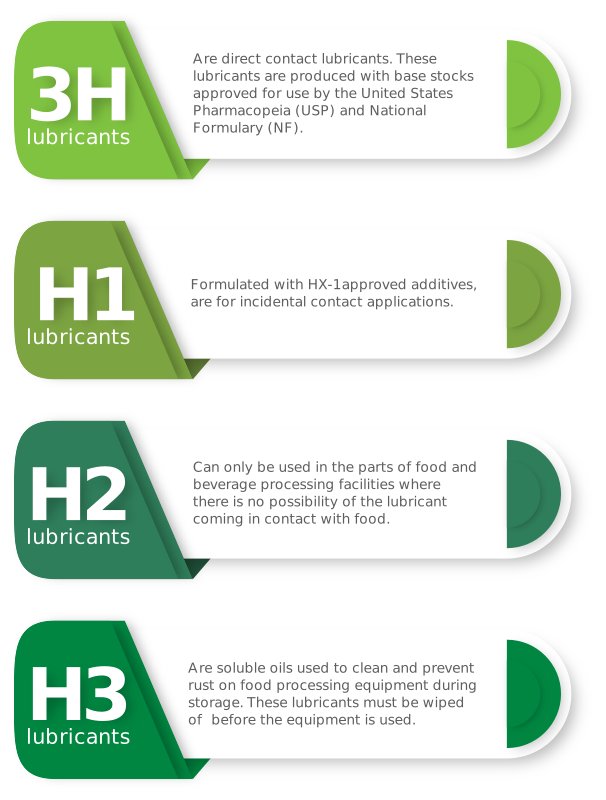
You can use food-grade lubricants in meat, poultry, and other food processing equipment, applications, and plants. These lubricants are classified into groups based on their likelihood of coming into contact with food. The USDA established the H1, H2, and H3 food-grade classifications, which are still in use today. The components employed in the formulation determine whether a new lubricant is approved and registered in one of these categories.
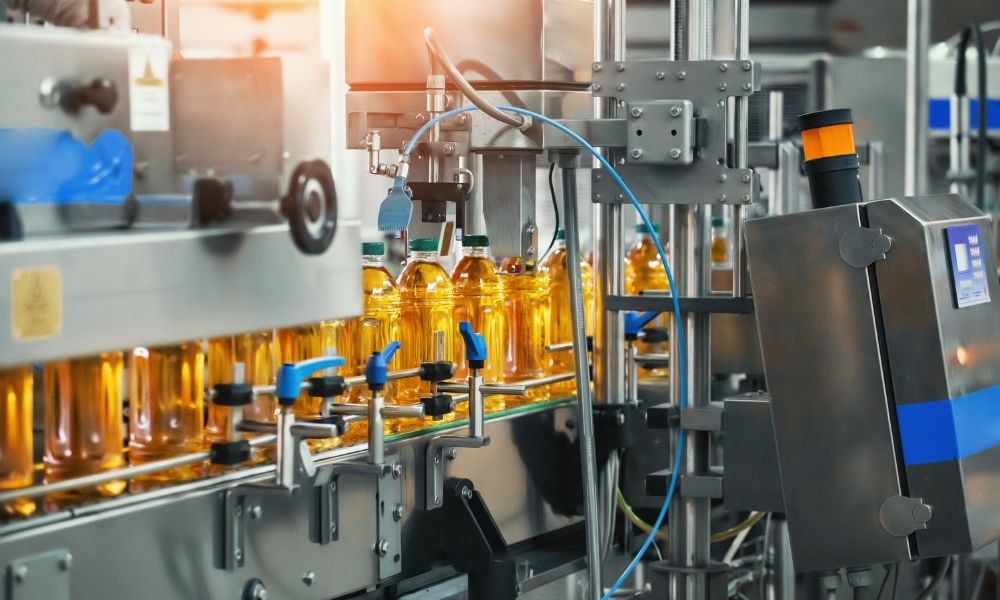
- H1 lubricants – Food-grade lubricants designed for use in food-processing facilities where accidental contact with food may occur.
- H2 lubricants – Food-grade lubricants applied to equipment and machine parts that do not come into contact with food.
- H3 lubricants – Food-grade lubricants, often edible oils, used to prevent rust on hooks, trolleys, and other equipment.
Acceptable Food-Grade Basestocks
The list of approved base stocks varies depending on whether a food-grade lubricant is H1 or H2. H2 lubricant base stock standards are less stringent, allowing a wider range of base stocks. Many products used in industrial (non-food) plants can also be used in food plants.
H1 lubricants, designed for incidental contact with processed foods, follow much stricter requirements. They use carefully selected mineral or synthetic base stocks.
Acceptable Food-Grade Additives and Thickeners
Base stocks alone are frequently unable to withstand the high demands placed upon them in food processing facilities. Formulators add additives to improve the performance qualities of lubricants. Greases consist of lubricating oils thickened with a thickening agent.
They can endure high temperatures and are water-resistant, both of which are critical characteristics for food preparation.
Understanding the variations between H1, H2, and H3 lubricants, as well as selecting the appropriate lubricant, is crucial for food safety and machine dependability.