



Maintenance culture refers to the underlying hierarchy of people and communication systems that bind a company’s maintenance team together.
Stephen J. Thomas, in his book “The Workbook for Improving Maintenance & Reliability Through Culture Change,” defines the four key infrastructures that make-up culture:
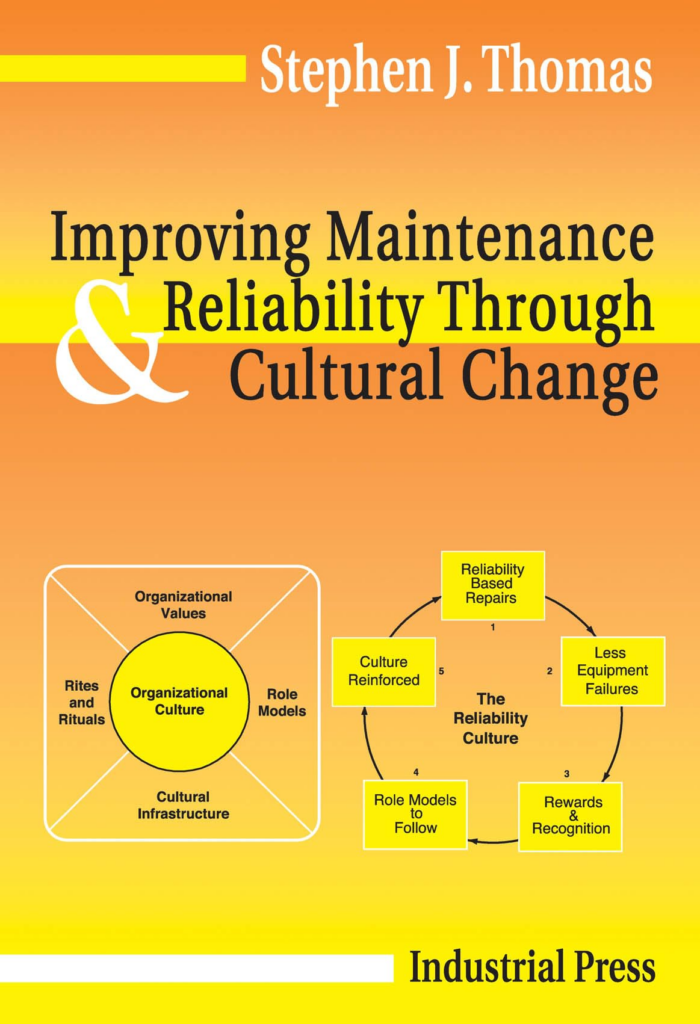
- Gossip – is an informal form of daily communication.
- Spies – people who pass on sensitive information to people who may or may not need to know it.
- Symbols – mechanisms for transmitting crucial information about what and who is significant.
- Language – terminology that explains what to do and how to do it.
Indications of a Poor Maintenance Culture
Other indicators of a shabby maintenance culture include:
- Apathy on the part of the employees
- Operations, Production, and Maintenance are all stressed.
- Staff turnover is high.
- The team has wasted time and resources.
- Insufficient data input
- Unplanned preventive maintenance work
- Response time to significant equipment breakdowns is slow.
- Task completion rates are low.
- Backlog of uncompleted job orders
How to Drive Change in Maintenance Culture
Changing people’s behavior effectively has a knock-on effect on equipment reliability. Old habits may be broken by establishing new levels of accountability and expectations. These are critical success aspects from a cultural standpoint.
Figures
Good data is a key facilitator in enhancing asset management, dependability, and the culture that goes with it. CMMS reports and dashboards can provide in-depth insights into performance, including whether your maintenance crew is overworked or downtime is increasing. You can use this information to justify hiring additional personnel and optimize maintenance schedules.
Focus
A targeted improvement strategy delivers quick results and provides opportunities to refine reliability-enhancement approaches. Meanwhile, prioritize maintenance personnel by interviewing mechanics and technicians and identifying their pain points, which directly influences culture.
Mentality
The attitudes and mindsets of leaders, managers, supervisors, and their crews are often modeled by top-level management. Because the underlying reasons for unreliability typically extend beyond the maintenance organization to other stakeholders, a company’s dependability philosophy starts at the top.
Method
Although equipment usually supports a process that delivers a product or service, maintaining a strong maintenance culture requires looking beyond reliability and considering the entire process.
Consequences
The actual causes of unreliability are frequently outside the maintenance organization’s direct control. Decisions and actions made during budgeting, design, procurement, installation, operation, scheduling, and maintenance create unreliability and a poor maintenance culture.
A Methodical Approach
A lasting cultural shift won’t happen overnight, but implementing key strategies and methods can accelerate the process and ensure behaviors change and are maintained positively. A systematic method will incorporate developmental milestones like:
- Determine who will be the owner and who will be the team.
- Examine the site’s present condition.
- Establish specific short-term objectives, broad long-term objectives, and non-negotiable activities.
- Create a plan for the future that includes correct documentation and procedures.
- Raise awareness throughout the plant.
- Individuals, groups, and the success of the site should all be rewarded.
- Examine, update, and record the program.
CRE’s Lubrication Program Development
Noria, CRE’s lubrication partner, devised a comprehensive lubrication program that covers all lubrication-related work processes and procedures, from purchase to the needed re-grease amount for each bearing in the plant. With CRE Philippines’ experience, Noria’s support, and a dedicated team of lubrication specialists, you can implement a world-class lubrication program in weeks, not years. Moreover, CRE provides full and abridged work plans through our Lubrication Program Development (LPD), allowing you to focus on what you do best.
Adopting a similar strategy should result in a competitive plant in the near future and allow for long-term success. Remember that the program’s long-term success is dependent not just on the present leadership team, but also on the defined processes in place.