
Category Blog

Lubricant Storage Tips for Your Plant
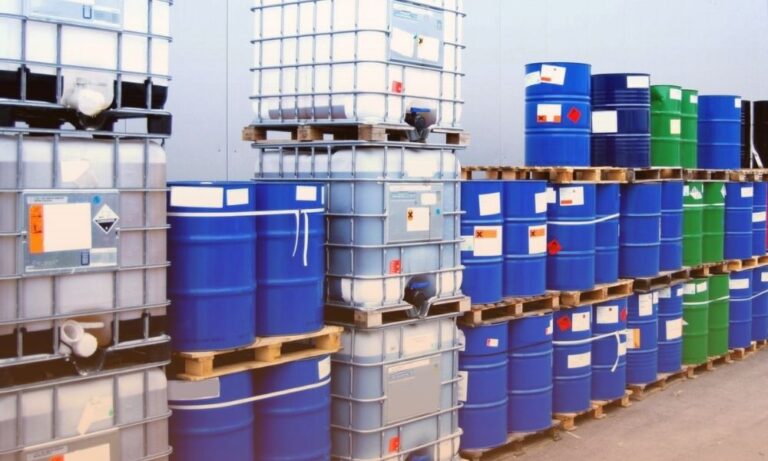
A storage area with numerous large industrial containers and barrels, mostly blue, green, and gray, stacked on wooden pallets against a plain wall.

Industrial lubricants must be handled, stored, and dispensed appropriately to minimize safety and environmental contamination issues. Manufacturers frequently make blunders such as mislabeling items and storing lubricants in areas with extreme temperatures. To know what the best conditions and setup…
ASCEND™ Lubrication Program Implementation

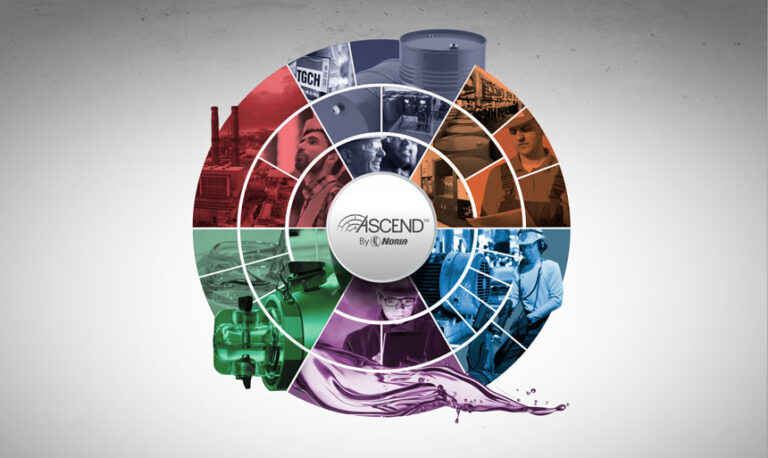
A circular collage of various industrial and technological scenes, with the central logo reading "ASCEND By Nonna." The images include factory workers, laboratory equipment, industrial settings, and technology-related visuals, arranged in colorful segments around the logo. ASCEND™ to Lubrication Excellence

With expensive lubricants and the requirement for machines to operate harder and quicker, high-performance lubricants are in high demand. Oftentimes, we expect the lubricants we order to meet the viscosity, base oil, performance characteristics, and contaminant cleanliness standards promised at…

CBM Technologies for Failure Mode Detection

A person in a uniform standing in front of multiple large monitors displaying various surveillance camera feeds. The individual is viewed from behind, focusing on the screens in a control room environment.

What causes machine components to fail? What are the most prevalent failure mechanisms, and how can you avoid them? Continue reading to learn how to spot components in various phases of progressive failure, as well as the tools you may…

Factors to Consider When Selecting Lubricants

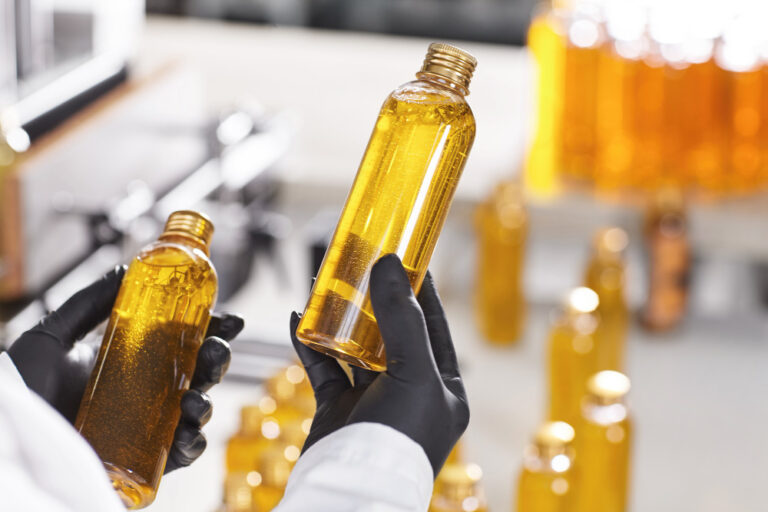
A person wearing black gloves and a white lab coat holding a clear bottle filled with a yellow liquid, inspecting it in a manufacturing or laboratory setting. Several similar bottles are visible in the background, some on shelves.

Operators must lubricate each piece of machinery with moving components. Lubrication is essential, but it may be a difficult task. This article seeks to answer some of the most often asked concerns regarding lubrication so you can choose the correct…

Reliability WebCon 2022

A classroom or training room with students seated at desks, attentively listening to a presenter at the front. The presenter is standing near a large screen displaying a presentation slide, and appears to be explaining something, gesturing with his hand. The room has multiple windows, and the overall tone of the image is sepia.

CRE Philippines’ Reliability Webcon 2022 and Reliability Quiz Bee started on a high note last March 10, 2022. Reliability Webcon 2022 is an event that aims to provide knowledge about machine reliability, asset management, and condition-based maintenance. Mr. Juan Bautista…

Condition Monitoring of Hydraulic Systems

A close-up view of a yellow industrial machine with multiple levers and a labeled cylinder that reads "Cylinder outrigger." The machine appears to be part of heavy construction or manufacturing equipment, with various pipes, hoses, and mechanical components visible. The background includes a mix of blue and orange hues, suggesting an outdoor setting with sunlight.

Hydraulic systems are used in a wide range of applications today – from simple assembly operations to integrated steel and paper mills. Through the use of Pascal’s Law, hydraulics allows the operator to do substantial tasks like lifting big loads,…

A Guide to Lubricant Additives

A close-up view of golden motor oil being poured from a container, with the liquid flowing smoothly in a stream. The background is blurred, emphasizing the shiny, viscous oil in the foreground.

Viscosity is a base oil’s most significant attribute. When establishing baselines for incoming oils, technicians typically check viscosity first. However, lubricants are more than just their viscosity. Understanding the role of additives and their function inside the lubricant is also…

Managing Oil Sweetening and Change Intervals

Golden motor oil is being poured into a container, with the oil flowing smoothly and reflecting light. The background is blurred, focusing attention on the rich, amber-colored oil.

OEMs propose certain oil change intervals based on testing conducted during the development or certification of equipment or lubricant. If your analysis tool suggests that the oil should be changed at intervals other than those recommended by the OEM, there are a…

Tips on How to Improve Maintenance Culture

A construction supervisor and a worker wearing safety vests are having a discussion in an office or planning area. The supervisor is holding a notebook and pen, taking notes, while the worker gestures with their hand. A yellow safety helmet is placed on the table in front of them. In the background, there are shelves with binders and office supplies.

Maintenance culture refers to the underlying hierarchy of people and communication systems that bind a company’s maintenance team together. Stephen J. Thomas, in his book “The Workbook for Improving Maintenance & Reliability Through Culture Change,” defines the four key infrastructures…