

One lubrication metric has proven especially useful for identifying hidden issues related to both the lubricant and the equipment.
At every stage of the lubricant’s lifecycle, data on Lubricant Utilization link closely with other essential parameters and KPIs. Some of these indications may be concerned with reducing overall lubricant costs, while others may be concerned with risk and reliability issues. Regardless of the indicator, it must start with setting up measurements and keeping track of accurate data.
Tracking Data for Lubricant’s Application
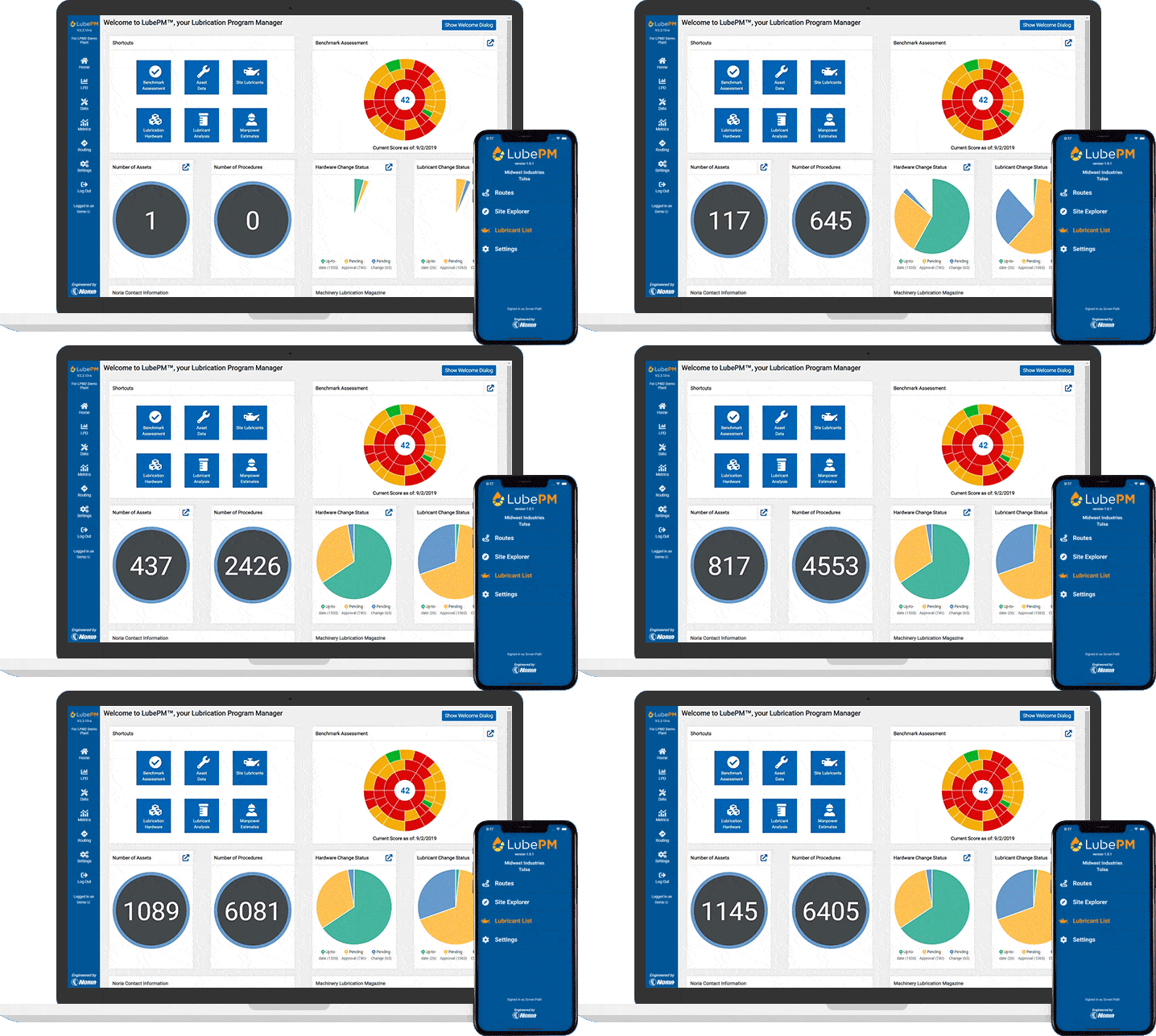
Companies almost always track lubricants using inventory management software. Manufacturers sell lubricants in a variety of containers, including grease pails, tubes, oil drums, totes, and quart- or gallon-size bottles. Collecting this data generates the first key information needed for monitoring lubricant utilization.
How Lubricants Get Removed
Maintenance teams purposely drain lubricants from machinery for various reasons. They collect the oil in an appropriate waste container and then transfer it to a larger waste oil storage tank. Teams can determine the volume using the disposal container’s markings or another appropriate method.
Other activities that affect lubricant volume after scheduled oil drains are:
- Gravity dripped out of leak spots
- Pressurized systems push out the seals.
- Air enters the product suction lines through the seals.
- Volatilization of oil molecules caused it to evaporate
- Micro-dieseling or other hot machine surfaces have burned it out
- Rubber and other elastomeric materials absorb it
- Impurities and other materials adsorb polar additives and other polar oil molecules, carrying them away during filtration.
- Stable foam generation produced foam that escaped through a breather port
- Splashed out in open-top sumps that were agitated
- Extracted for lubricant analysis
- On open-air components, flung out by high centrifugal force
- Maintenance on bottom sediment and water bowls open-top flushed out
Every drop of lubricant is important for good lubrication. And when it gets wasted, the equipment is put in danger. Maybe exceedingly abnormal, and some of the more unusual removal mechanisms may be impossible to measure in terms of volume.
Metrics for Lubricant Utilization Calculation
Quantifying the total volume purchased or segregated for each lubricant type from a plant-wide perspective should be simple. Maintenance teams can then compare this information with the total plant-wide lubricant disposed or with the combined machine charge over a specific period, such as a year. Here’s more about these two ratios.
The Lubricant Utilization Ratio compares the volume of lubricant purchased with the volume disposed. A higher ratio signals that more oil is unaccounted for, likely because one or more removal methods were not tracked. A value near one indicates that the majority of oil applied to machinery finally finds its way to a suitable disposal container.
The Oil Consumption Ratio is a calculation that compares the volume of lubricant purchased to the total lubrication machine charge. A lower number indicates that the oil in the machine will last longer. The consumption ratio in the example data below started at 2.4.
Technicians perform oil changes based on equipment condition rather than a fixed schedule, helping machines run more efficiently and reducing the need for shutdowns. Additionally, fewer leaks occur, and unidentified lubricant removal mechanisms are minimized. As a result, the oil remains better suited to its applications, which lowers the rate of lubricant degradation.
A longer lubricant life implies that condition monitoring is in place.Consequently, maintenance teams must monitor KPIs such as the Oil Consumption Ratio, condition indicators, and failure rates. They can then calculate the Lubricant Utilization Ratio by comparing these data points with the known lubricant volume for each machine. Since these metrics are machine-specific, teams can investigate the factors behind unusually high or low ratio values more closely.
Monitoring Lubricant Utilization to Create Key Performance Metrics
Lubricant Utilization has connections with several metrics and key performance indicators. If new oil test results frequently reveal that the lubricant does not meet specification or cleanliness criteria, maintenance teams must address the issue promptly. Huge pieces of machinery with more sophisticated contamination control systems may impact lubricant volume control. Some contamination removal procedures remove a certain amount of lubricant, either temporarily or permanently, posing a risk to the machinery.
Optimizing Your Lubrication Program
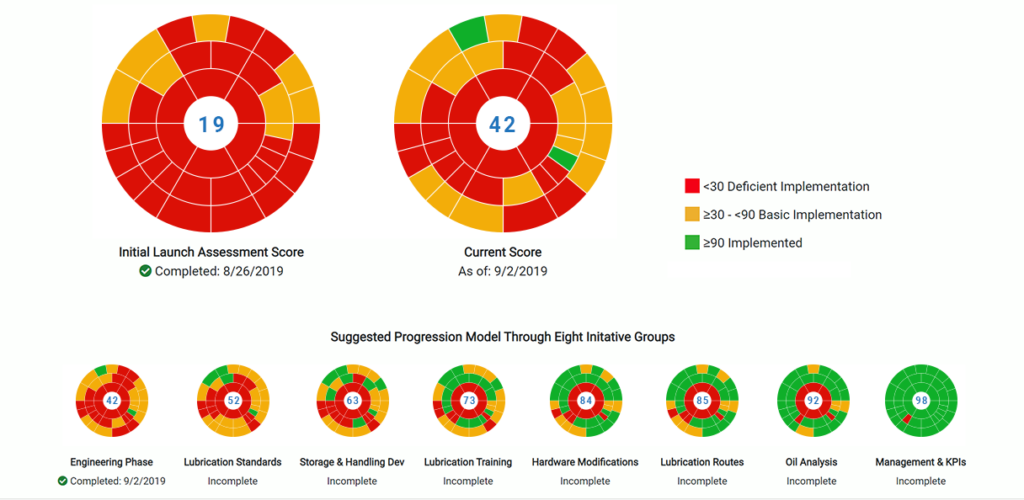
CRE Philippines, in collaboration with Noria, can help you optimize and implement a global lubrication program in collaboration with a dedicated team of lubrication professionals who are all ICML certified. Noria has developed a comprehensive, well-planned lubrication program that covers all lubrication processes and operating procedures, from purchase to the size required for each tank in the plant.