Best Consulting Program For Your Organization
LUBRICATION PROGRAM DEVELOPMENT AND OPTIMIZATION
We Engineer the Best Lubrication Program
Turn lubrication into a strategic program, not a maintenance cost. Stop losing uptime, assets, and budget to inconsistent lubrication practices. CRE Philippines, together with its global partner Noria Corporation, delivers a fully engineered, enterprise-wide Lubrication Program Development (LPD) that standardizes every lubrication activity, from procurement to precise re-grease volumes per bearing. What normally takes years or decades to build internally, we deliver in man-weeks to months—complete, documented, trained, and ready to execute.
Key Features
We standardize lubrication enterprise-wide with engineered asset procedures, optimized routes, and automated tasks—backed by ROI-driven roadmaps, built-in KPIs, and training-ready documentation to drive reliability, adoption, and measurable results.
Business Benefits
Our Lubrication Program Development delivers fast, measurable ROI by reducing equipment failures, lowering repair costs, and extending asset life through engineered lubrication standards. Optimized routes and automated tasks increase maintenance productivity and wrench time, while a single, enterprise-wide lubrication strategy ensures consistent execution and scalable cost savings across all sites.
ICML 55.1 Alignment
Our Lubrication Program Development is fully aligned with ICML 55.1, transforming lubrication into a structured, world-class reliability discipline. We deliver documented work processes, clearly defined roles, asset-specific procedures, and competency-based training, supported by built-in KPIs, audits, contamination control, and lubricant management standards. The result is a lubrication program that’s repeatable, auditable, and sustainable, giving your organization the confidence to scale excellence while driving consistent performance and measurable ROI.
ISO 55000 Asset Management Alignment
Elevate lubrication from a reactive maintenance task to a strategic asset management discipline. By linking lubrication activities to asset performance and risk, embedding lifecycle thinking into maintenance strategies, and supporting structured change management, we enable organizations to operate with measurable objectives, performance indicators, and data-driven decision-making, driving smarter investments, improved reliability, and long-term asset value.
Benefits
Why Lubrication Program Development?
Poor lubrication is one of the leading causes of premature equipment failure. Our program is designed to help you:
- Reduce unplanned downtime
- Extend asset life
- Improve maintenance productivity
- Standardize best practices across sites
- Achieve measurable ROI
- Build a sustainable lubrication culture

Our mission
Turn Reliability Goals into Reality
Results vary according to program, asset condition and age, operating environment, and maintenance program execution.
Surprises
90
%
Equipment Life Extension
25
%
Cost Reduction
25
%
Faq
Frequently Asked Questions
Explore answers to common questions about CRE services, reliability, testing, and results.
What is Lubrication Program Development (LPD)?
Lubrication Program Development is a structured approach to designing, standardizing, and optimizing how lubrication is managed across your facility. It ensures the right lubricant is applied, in the right amount, at the right time, using best practices that improve reliability, reduce failures, and extend equipment life.
What types of equipment are included in an LPD program?
LPD can be applied to a wide range of lubricated assets, including gearboxes, bearings, motors, pumps, compressors, hydraulics, fans, and other lubricated industrial equipment. Programs are customized based on asset criticality and operating conditions.
What does a Lubrication Program typically include?
A complete LPD program may include:
- Asset lubrication surveys
- Lubricant selection and consolidation
- Lubrication routes and frequencies
- Detailed lubrication task instructions
- Identification and tagging of lube points
- Storage and handling best practices
- Contamination control strategies
- Alignment with oil analysis and reliability goals
How long does it take to develop a lubrication program?
Timelines depend on facility size and scope, but most programs are developed in phases. Initial assessments can be completed quickly, while full implementation may occur over several weeks to ensure accuracy, training, and long-term sustainability.
Can LPD integrate with our existing maintenance system?
Yes. Lubrication programs are designed to integrate with CMMS/EAM systems, preventive maintenance schedules, and reliability initiatives. Lubrication tasks, frequencies, and procedures can be aligned with your current workflows
Does LPD help reduce lubricant usage?
Yes. Proper lubricant selection, correct application volumes, and optimized intervals often lead to reduced lubricant consumption, fewer change-outs, and lower waste, without compromising equipment protection.
Do you provide standard procedures and documentation?
Absolutely. LPD delivers clear, standardized lubrication procedures that technicians can follow consistently. This includes written instructions, labeling, route sheets, and visual aids where applicable.
Is training included as part of the program?
Yes. Training is a critical part of LPD. Programs typically include hands-on and classroom training to ensure technicians understand lubrication fundamentals, proper application methods, and how to maintain the program long-term.
Is Lubrication Program Development a one-time project?
LPD is designed for long-term success. While initial development is a defined project, ongoing reviews, audits, and continuous improvement are recommended to adapt to changes in equipment, operating conditions, or business goals.

PHASE OF LUBRICATION PROGRAM
Best Practices in Lubrication Program
Turn lubrication into a reliability advantage. Best-practice lubrication programs help extend equipment life, reduce unplanned downtime, and lower total maintenance costs through disciplined, repeatable processes.
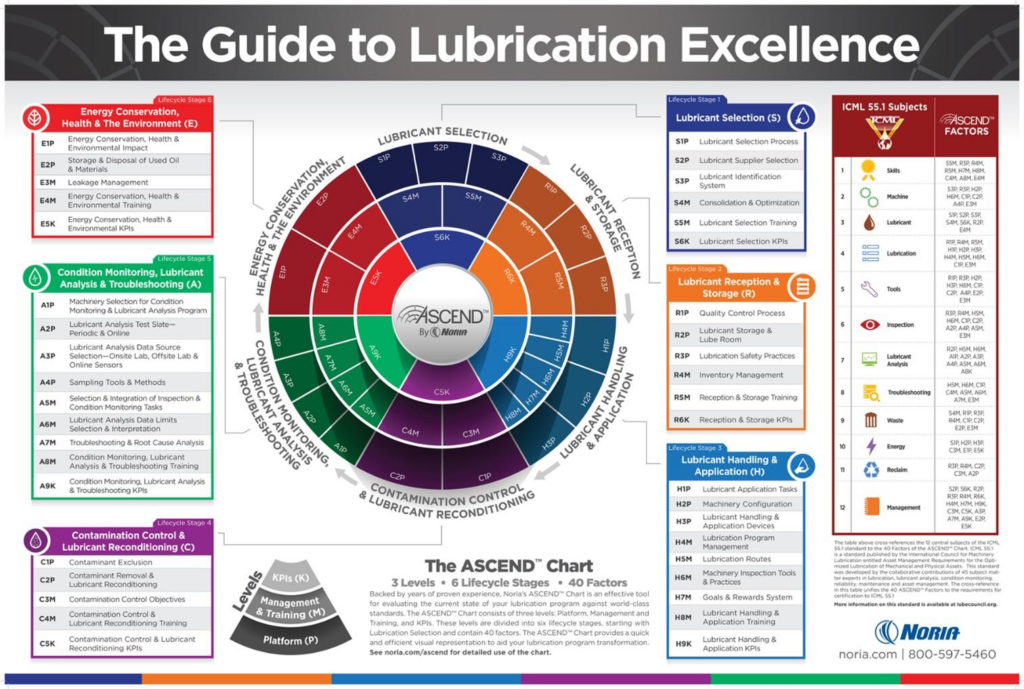
PHASE 1: ASCEND™ Benchmarking (Assess & Roadmap)
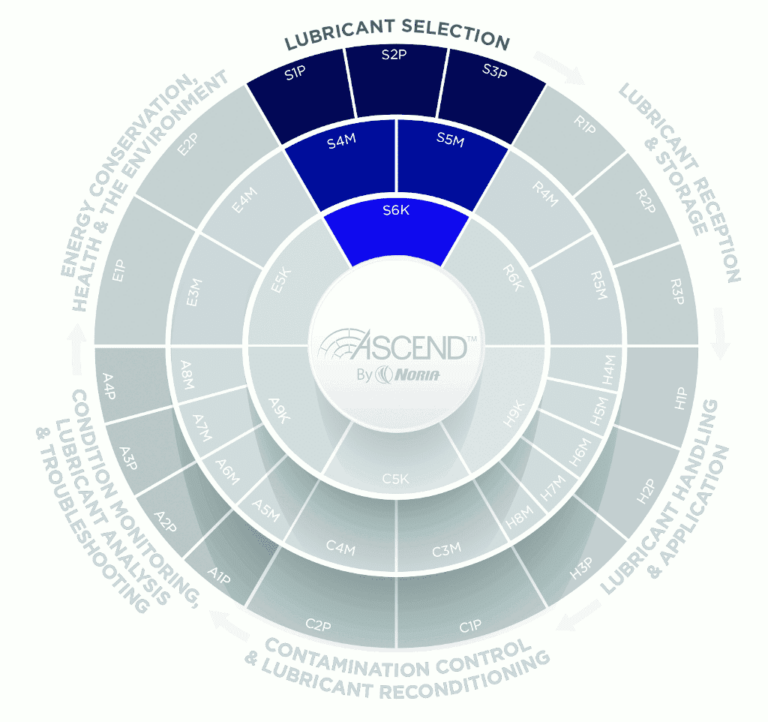
A structured, data-driven assessment of your current lubrication maturity using a 500-point survey and 40 key program elements.
Typical 3-Day Engagement
Day 1 – Facility walkthrough + stakeholder interviews
Day 2 – Offsite analysis + report development
Day 3 – Executive presentation + lubrication awareness training
Deliverables Include:
- Executive Summary & SWOT Analysis
- Overall Compliance Level
- Cost–Benefit Analysis
- Maturity Grades for 40 Program Elements
- Improvement Roadmap with Priority Next Steps
- KPI & Metrics Recommendations
- Periodic Review & Audit Framework
- Access to LubePM™ Lubrication Program Manager
This phase clearly shows where you are, where you should be, and how to get there.
PHASE 2: Engineering Design
LPD Phase II Engineering Design transforms raw field information into actionable engineering intelligence. This phase delivers all the critical data required to build a precise, reliable, and optimized lubrication program—customized to your assets, operating conditions, and reliability goals.
Through detailed asset reviews and best-practice engineering standards inspired by Noria Corporation methodologies, Engineering Design creates the technical foundation for sustainable lubrication excellence.
What Is Engineering Design?
Engineering Design is where your lubrication strategy takes shape.
During this phase, every lubricated asset is evaluated to capture key operating parameters, component details, lubricant requirements, and environmental conditions. That information is then engineered into optimized lubrication specifications, hardware recommendations, and dynamic procedures—eliminating guesswork and replacing it with data-driven precision.
The result: a complete blueprint for how lubrication should be performed across your facility.
What You Receive
LPD Phase II delivers a comprehensive engineering dataset that supports smarter decisions and stronger reliability outcomes, including:
- Optimized lubricant selection for each asset
- Engineered lubrication intervals and volumes
- Asset-specific lubrication procedures
- Recommended contamination control and hardware upgrades
- Standardized data ready for CMMS integration
- Clear documentation to support training and execution
Every recommendation is built around your real operating conditions—not generic assumptions.
Why Engineering Design Matters
Most lubrication programs fail because they’re based on incomplete information or outdated practices. Engineering Design closes that gap.
By capturing accurate machine data and applying proven engineering principles, this phase helps you:
- Reduce premature equipment failure
- Improve lubricant cleanliness and control
- Standardize lubrication practices
- Increase asset life and uptime
- Build a scalable, sustainable lubrication program
This is where reliability starts.
From Data to Performance
LPD Phase II doesn’t just document your assets—it engineers your lubrication program for performance. With a fully developed technical foundation in place, your team gains the clarity, consistency, and confidence needed to execute lubrication the right way, every time.
PHASE 3: Implementation
Turning Your Engineered Lubrication Program into Reality
The Implementation Phase is where strategy becomes action.
After completing the Ascend™ Assessment and Engineering Design phases, you have a fully engineered lubrication program built on data and best practices. Phase III — Program Implementation — brings that design to life by outfitting your assets with the right products, hardware, procedures, and practices for long-term success.
Core Benefit: Seamless Execution for Real-World Results
Implementation eliminates the gap between design and performance.
This phase ensures your lubrication strategy isn’t just documented — it’s operational. Rather than leaving procurement, installation, and change management to chance, Program Implementation integrates the precise products, practices, and workflows your team needs to meet reliability goals efficiently and confidently.
With support every step of the way, you:
✔ Equip Assets with the Right Hardware
Identify, specify, and deliver lubrication-related products like breathers, sight glasses, filters, and other components that make best-practice procedures possible.
✔ Simplify Procurement and Logistics
Avoid time-consuming purchasing tasks — from supplier evaluations and ordering to tracking and delivery — with expert support and access to quality suppliers.
✔ Integrate Procedures into Daily Workflows
Built-for-your-facility procedures, management practices, and KPIs are embedded into routine lubrication activities, helping your team execute consistently and confidently.
✔ Manage Change with Dynamic Tools
All updates — from hardware installs to procedure adjustments — stay organized and up-to-date within your lubrication management platform, enabling controlled execution and ongoing improvement.
Why Implementation Matters
Even the best-designed lubrication program can fall short without effective execution. The Implementation Phase bridges that gap by converting engineered data into operational excellence. It transforms a strategy document into:
- Real hardware installed on your machines, ready for best-practice lubrication
- Procedures that workers actually follow
- Processes aligned with your reliability goals
- Performance tracked through KPIs and updates
In short, Phase III delivers tangible, measurable gains — from improved machine performance to reduced downtime and greater confidence in your lubrication practices.
From Plan to Performance
Implementation is where your lubrication program begins to drive results. With procurement support, hardware integration, workflow alignment, and tools that keep your procedures current, this phase ensures your optimized lubrication strategy isn’t just built — it works.
Ready to put your lubrication design into action?
Talk to our Consultants
Trusted Companies
0
+




Newsletter Updates
Enter your email address below to subscribe to our newsletter.