



Why Lubricant Integrity Matters in Philippine Industrial Plants
Lubricant integrity is essential for equipment reliability. However, it is often compromised before the oil reaches the machine. In many Philippine industrial plants, such as food manufacturing, cement production, power generation, and general manufacturing, failures often start during lubricant reception and storage.
As highlighted in the Machinery Lubrication article on lubricant integrity during reception and storage, the condition of lubricants must be protected from the moment they enter the facility, because every transfer and handling step introduces contamination risk that directly affects machine reliability.
Lubricant Integrity Begins at Reception
A core principle emphasized in the Machinery Lubrication guide is that new oil should never be assumed to be clean oil. Even freshly delivered lubricants may already contain contaminants from production, packaging, or transportation. Once received on-site, the responsibility for cleanliness shifts entirely to the end user, making reception a critical control point in the lubrication lifecycle.

In Philippine industrial environments, this step is even more important due to exposure to humidity, long transport durations, and inconsistent handling practices. Without proper reception procedures, facilities risk introducing contaminated lubricants directly into critical equipment.
Best practices at reception include verifying correct lubricant specifications, inspecting container integrity, checking seals and labels, and ensuring documentation accuracy before acceptance. This aligns with the principle that lubricant quality control begins before storage, not after failure occurs.
Storage is the Most Critical Contamination Control Stage
After reception, lubricant integrity must be preserved through proper storage. Machinery Lubrication emphasizes that environmental exposure is one of the leading causes of lubricant degradation before use.
In many Philippine facilities, lubricants are stored under non-ideal conditions, such as outdoor areas, high-humidity environments, and spaces without proper segregation or climate control. These conditions allow water ingress, dust contamination, and oxidation processes to occur even before the oil is applied.
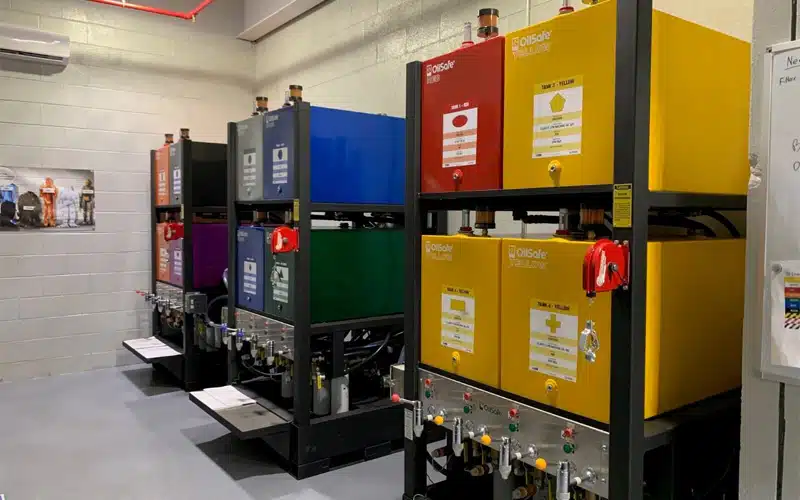
Photo Source: Oil Safe
CRE’s own guidance in lubricant storage tips for your plant reinforces this, noting that improper storage environments and temperature fluctuations can significantly reduce lubricant shelf life and performance reliability.
Best Practices for Maintaining Lubricant Integrity
According to Machinery Lubrication framework on reception and storage control, world-class lubrication programs rely on strict handling discipline to preserve lubricant condition.
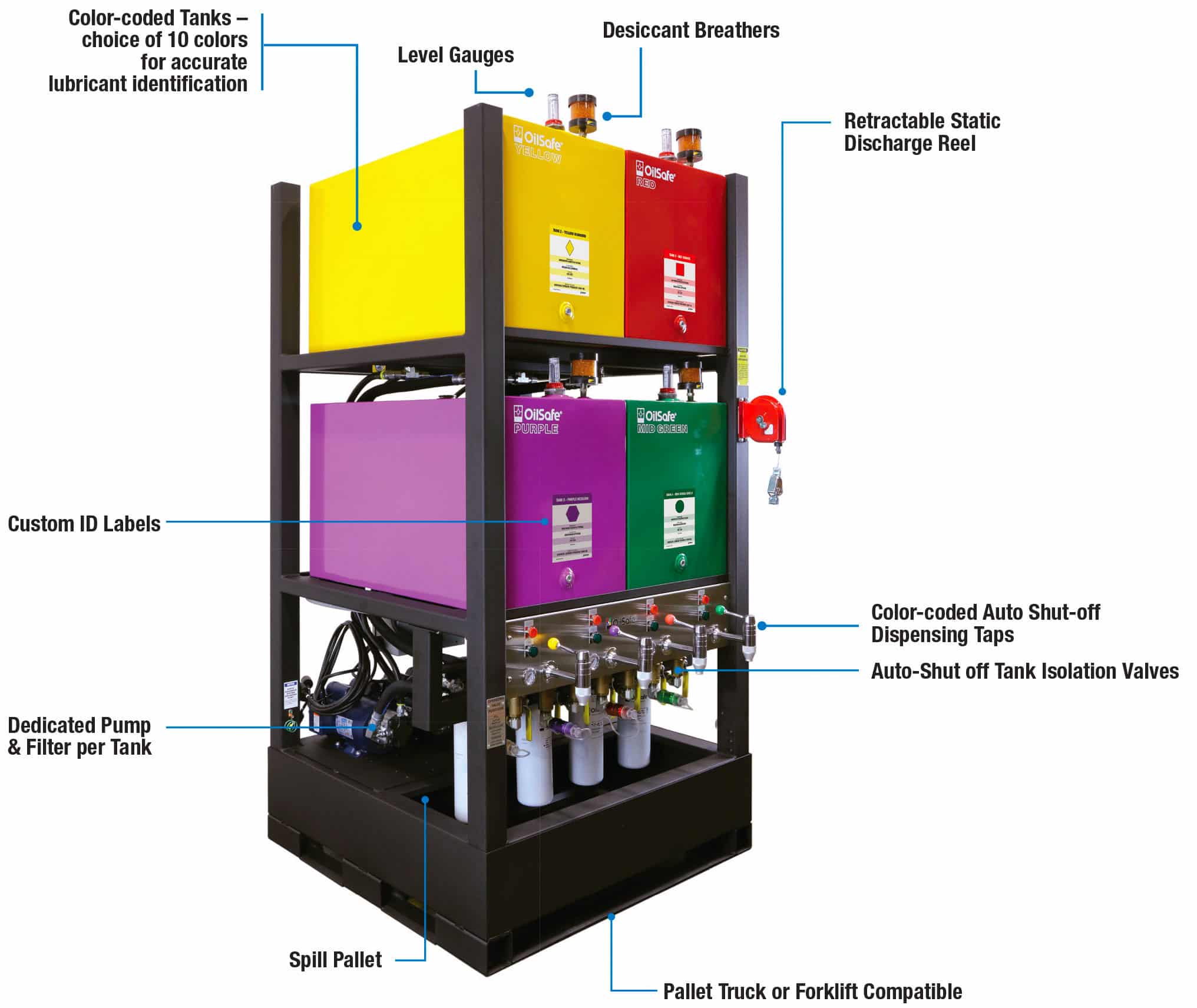
Photo Source: Oil Safe
Key best practices include:
- Inspecting all lubricant deliveries upon arrival
- Verifying seals, labels, and packaging integrity
- Storing lubricants in clean, dry, and controlled environments
- Preventing cross-contamination through proper segregation
- Using FIFO (First-In, First-Out) inventory management
- Maintaining controlled transfer and dispensing systems
These practices ensure that lubricants remain clean, dry, and suitable for use throughout their lifecycle, which is essential for reliable machine performance.
Why This Matters in Philippine Industrial Plants
In Philippine industrial plants, environmental realities such as high humidity, airborne contaminants, and limited storage infrastructure significantly increase lubricant degradation risk.
Without structured systems, lubricants can lose integrity before use, leading to:
- Increased bearing and gearbox wear
- Higher contamination-related failures
- Reduced equipment lifespan
- Increased downtime and maintenance costs
This makes lubrication management not just a maintenance function, but a core reliability strategy.
Lubricant Integrity as a Reliability Strategy
Machinery Lubrication emphasizes that lubricant management is not just about application; it is about controlling the entire lifecycle from reception to disposal. In practice, this means treating lubricant storage and handling as a core reliability strategy rather than a support function.
Facilities that implement structured lubrication systems benefit from improved equipment uptime, reduced contamination-related failures, extended asset life, and stronger compliance with maintenance standards.
How CRE Philippines Supports Lubrication Excellence
To help industrial facilities strengthen lubrication reliability, CRE Philippines provides structured solutions designed for real-world operating conditions.
Training Program – MLE (Machinery Lubrication Engineer Philippines)
The MLE Training Program builds technical expertise in lubrication management, oil analysis, and contamination control. It equips professionals to implement structured lubrication systems aligned with industry best practices from Machinery Lubrication and real plant conditions in the Philippines.
Consulting Program – LPD (Lubrication Program Development)
The LPD Consulting Program supports full lubrication system transformation, including:
- Lubrication program assessment
- Storage and handling system design
- Contamination control strategies
- Implementation and execution support
This helps facilities transition from reactive lubrication practices to structured reliability systems.
Conclusion
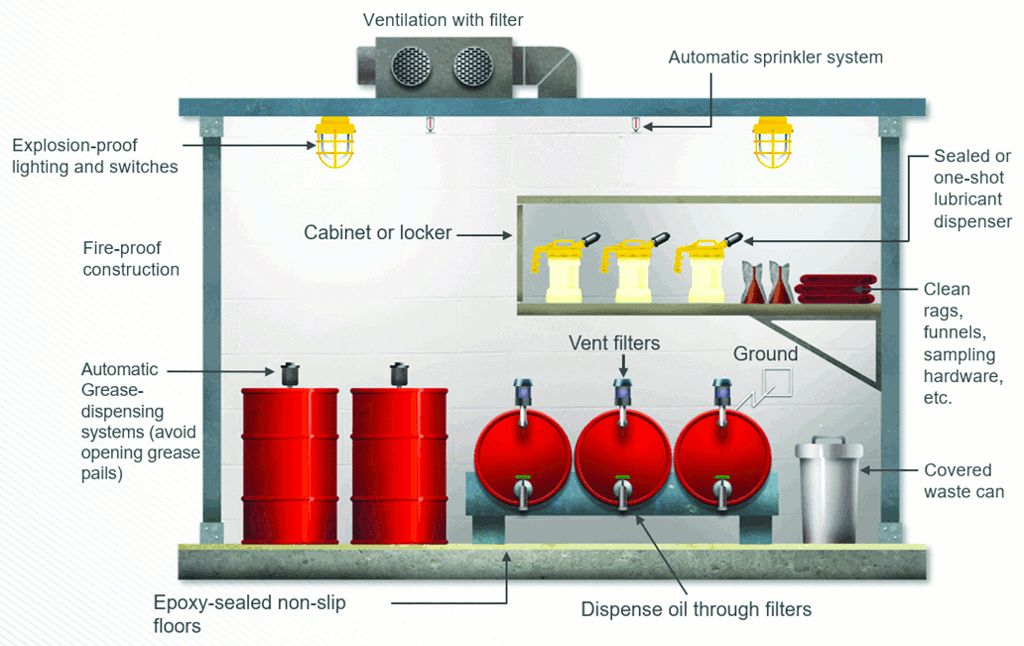
Photo Source: Machinery Lubrication
Lubricant integrity starts at reception and storage, not at the machine. According to Machinery Lubrication’s guidance, each stage of handling can introduce contamination risks. Controlling these risks is essential for reliable equipment performance.
In Philippine industrial plants, where high humidity, environmental exposure, and storage limitations are common, strengthening lubricant integrity is one of the most practical and cost-effective ways to improve reliability, reduce failures, and extend equipment life.
Next Steps for Improving Lubrication Reliability
If your facility is experiencing recurring lubrication issues or wants to strengthen its reliability systems, structured capability development and program implementation can help address these gaps.
You can contact us to sign up for Machinery Lubrication Engineer Training Philippines (MLE), designed to deliver practical, field-focused skills aligned with real maintenance conditions and local industrial challenges.
For organizations ready to go beyond training, Lubrication Program Development (LPD) helps design and implement complete lubrication systems, including assessments, planning, execution strategies, and site-specific best practices tailored to Philippine industrial environments.
For more complex or site-specific challenges, we also offer Consulting Services that provide expert, hands-on support to diagnose lubrication issues, optimize program performance, and align practices with reliability and operational goals.