


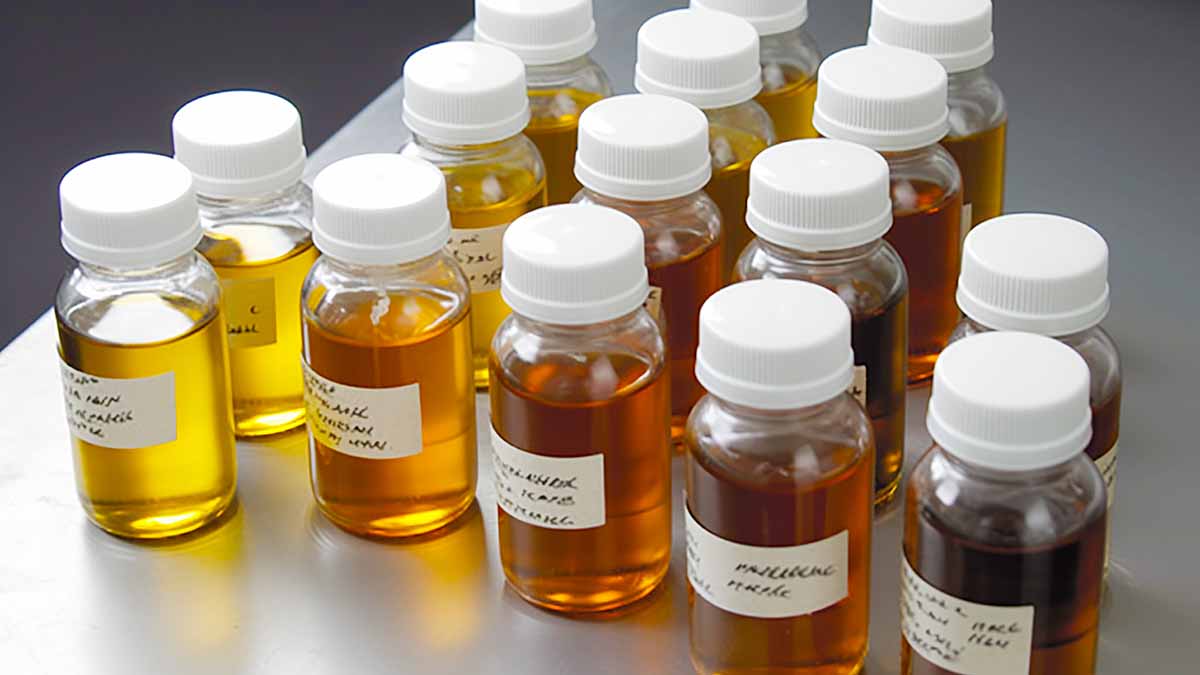
Oil Analysis Interpretation
While a good oil analysis report provides detailed analyses and actionable recommendations, it is still important for your organization to have someone who can perform oil analysis interpretation in the context of the actual machine environment. Below are some fundamental tips on how to interpret your reports.
Understanding Oil Analysis Reports
In our last article on Simple Guide for Oil Analysis Interpretation, we discussed the deductive and inductive approaches. With the deductive approach, you read the analyses and interpretations first, then review each oil analysis parameter. The inductive approach works the opposite way: examine each parameter first, then read the analyses.
To stay organized, start by separating reports by their rating system: normal, caution, or warning. For reports marked warning, identify which aspect caused it: oil condition, contamination, or machine wear.
Oil Condition
A. Viscosity Result Interpretation
Viscosity is one of the most important lubricant properties and must be monitored regularly. It measures a lubricant’s resistance to flow at a given temperature. Lubricants with the wrong viscosity cannot form a proper film, reduce metal-to-metal contact, remove contaminants, or transfer heat efficiently. This can cause overheating, accelerated wear, and machine failure.
We test industrial oils at 40°C (used in turbines and hydraulic equipment) and engine oils at 100°C. To meet an ISO VG (viscosity grade), oil must fall within ±10% of the target viscosity. For example, ISO VG 22 requires viscosity between 19.8 and 24.2.
- ±10% → Normal
- ±10–20% → Caution
- ±20% → Critical
B. Determining Acid Number (AN)
Acid Number (AN) indicates oil condition and acid buildup from oxidation or additive depletion. High AN can cause corrosion. We measure AN using titration and report it in mg KOH/g. The critical level depends on equipment and application.
AN reflects both weak organic acids and strong inorganic acids. Acid levels rise when contaminants enter the oil, the wrong oil is used, or oxidation depletes additives. Some additives are mildly acidic and temporarily raise AN; when these deplete, AN falls. Always assess AN along with additive health and water content.
Contamination Condition
A. Measuring Moisture Content
The presence of water is a serious threat to the equipment as it promotes corrosion of components and oxidation of the oil. Water can also reduce the load-handling capacity of oil, separates additive from the oil, and if not addressed, can lead to catastrophic failure.
The most common laboratory test that is used to measure water is the Karl Fischer coulometric method. Most systems require that water should not exceed 500 parts per million (1 ppm = 0.00001% by volume). When the level of moisture is abnormally high, it indicates a source of water ingress. Check your breathers, seals, reservoir covers, heat exchangers or water jackets, and the condition of condensation.
B. Gauging Particle Counts
Another key parameter that you have to monitor is the particle count. Particles, big or small, tend to cause serious damage when they enter the system. Particle count, as the name suggests, counts the particles according to particle size. The current standard for reporting cleanliness is ISO 4406:99. Before you measure particle count, it is important to set your particle count target. When the actual particle count is higher than your cleanliness target, that means your system is dirty and you need to install your corrective actions as soon as possible.
Due to the straightforward characteristic of particle count, most maintenance professionals rely on particle count. Nowadays, online sensors and onsite particle counters have become increasingly popular. While oil cleanliness is vital to the health of equipment, it is not the be-all and end-all parameter. Relying on particle count alone will leave you blind from the effects of abnormal oil conditions and machine wear conditions. It cannot distinguish varnish, demulsibility, acidity, or wrong oil contamination. Therefore, it is still very important to gather information using other parameters.
Machine Wear Condition
A. Elemental Spectroscopy
Here’s a revised version of your text with active voice, shorter sentences, and unnecessary words removed.
Elemental Analysis in Oil
Particle count measures contamination but does not identify its type. Elemental analysis (or elemental spectroscopy) reveals whether particles are wear metals, foreign contaminants, or additive elements. It can also detect mixing of different oils or changes in formulation.
Elemental analysis uses atomic emission spectroscopy (AES). AES excites sample atoms with a high-energy source. Excited atoms move to a higher electronic state, then return to a lower state, releasing energy as light. Each element emits light at specific wavelengths. By measuring this light, we determine the types of elements and their concentrations.
Oil labs typically use two types of AES instruments:
- Rotating Disk Electrode (RDE) – detects particles smaller than 8–10 microns
- Inductively Coupled Plasma (ICP) – detects particles smaller than 3 microns
These instruments have limitations. They may miss larger wear particles from fatigue, severe sliding wear, spalling, or cutting wear. To detect larger particles, labs can use Rotrode Filter Spectroscopy (RFS). Using RDE and RFS together provides a more complete picture of machine wear.
B. Analytical Ferrography
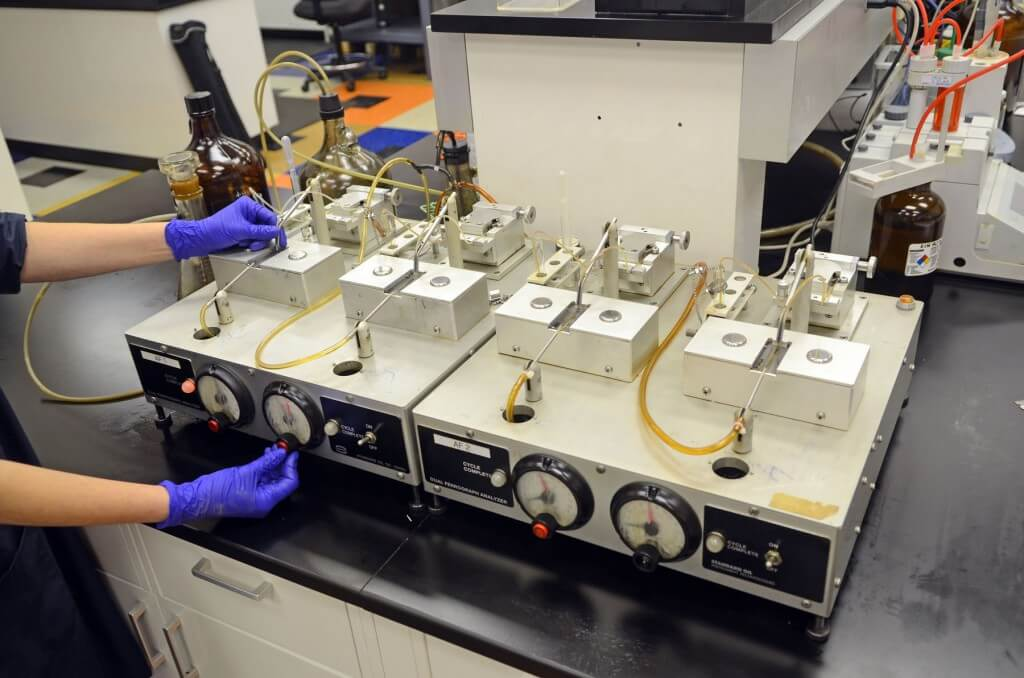
Analytical ferrography is one of the most powerful oil and machine diagnostic tools today. It can be used to identify an active wear problem and failure modes. Analytical ferrography is oftentimes not included in a basic oil analysis package due to the high price and lack of understanding of its full value. Analytical ferrography results include a photomicrograph of the wear debris along with specific descriptions of the particles such as size, shape, and metallurgy. Using analytical ferrography, you can draw conclusions regarding the wear rate and health of the component.
While a good oil analysis report provides detailed insights and actionable recommendations, it’s crucial to interpret these results within your machine’s environment. Understanding key parameters like viscosity, acid number, moisture, particle counts, and elemental analysis helps prevent costly failures. For expert guidance, Contact Crephils today!